Quantazone is a leading AI Technology Consulting Firm offering next‑gen IT, CRM, ERP, HRMS, and Marketing solutions to drive innovation and growth.

Subscribe to updates
© 2026 Quantazone Updates

CRM/ERP/HRMS

Feb 16, 2026

What’s New

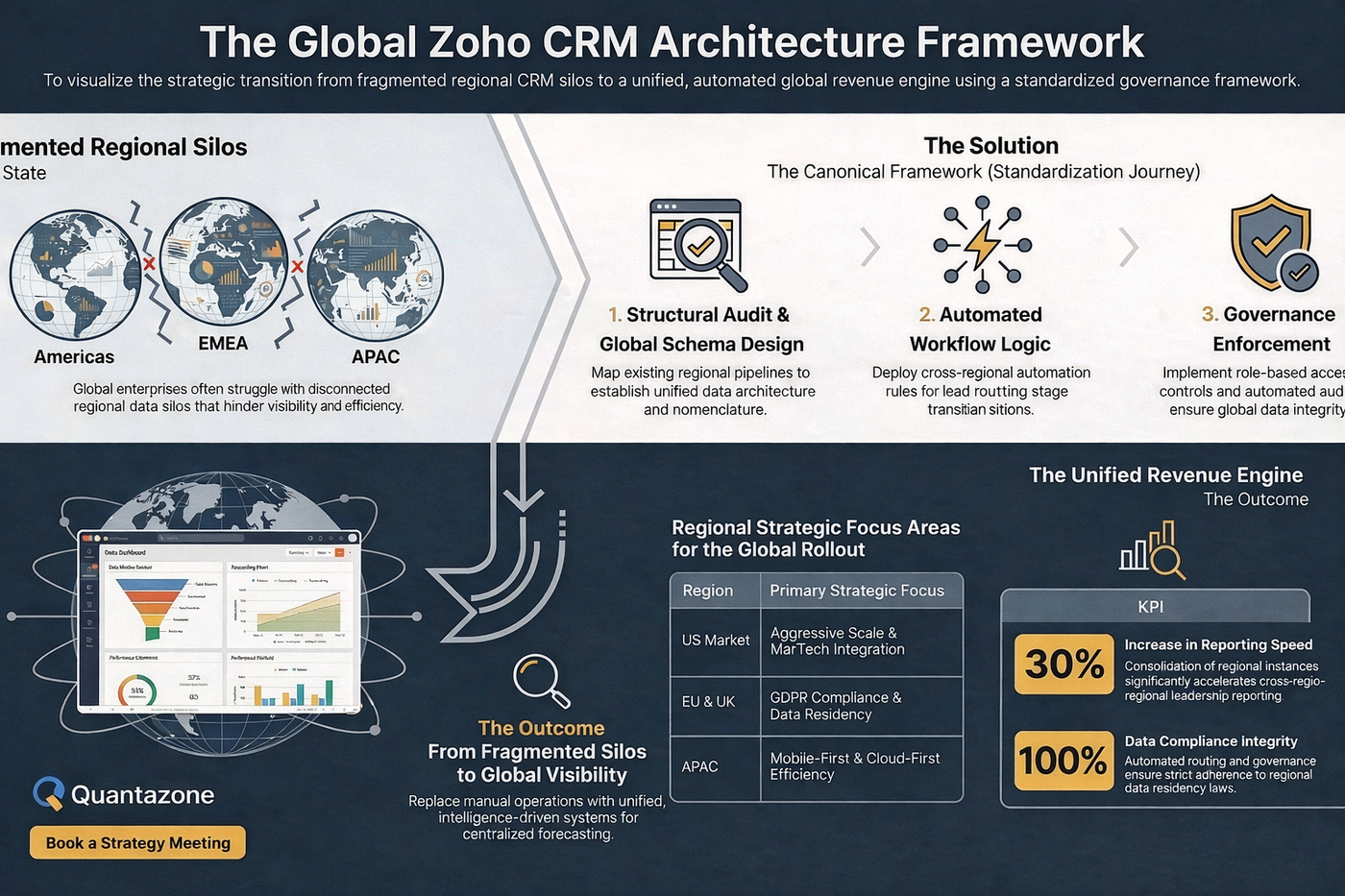
The Unified Global Revenue Architecture for Zoho CRM brings fragmented regional operations into a single, cohesive engine. It incorporates Zia-powered Predictive Automation to evaluate cross-regional data points (deal value, engagement, and history) and enable proactive lead routing. Spaces provide organized work zones that unify apps and live information streams by department or region, reducing interface clutter and improving operational clarity.


Why It Matters

Enterprise organizations gain Global Pipeline Visibility with consistent reporting accuracy across multiple time zones. Automation through Zia Hubs reduces repetitive execution layers, increasing Lead-to-Opportunity Velocity while maintaining a high Data Cleanliness Score through centralized governance.


Who It’s For

Designed for CTOs, Sales Operations Leaders, and Global Revenue Officers who require centralized oversight across diverse regional sales structures.


How It Works

The framework operates through a structured global model:

  • Structural Data Audit: Maps regional schemas to identify nomenclature conflicts.
  • Global Schema Standardization: Aligns unified picklists and mandatory fields across regions.
  • Automated Process Orchestration: Uses Zoho Blueprints to standardize deal stage transitions.
  • Global Governance Enforcement: Applies role-based access control (RBAC) to secure sensitive regional data.

Ready to modernize your enterprise sales engine?
Book a meeting.

Feb 03, 2026

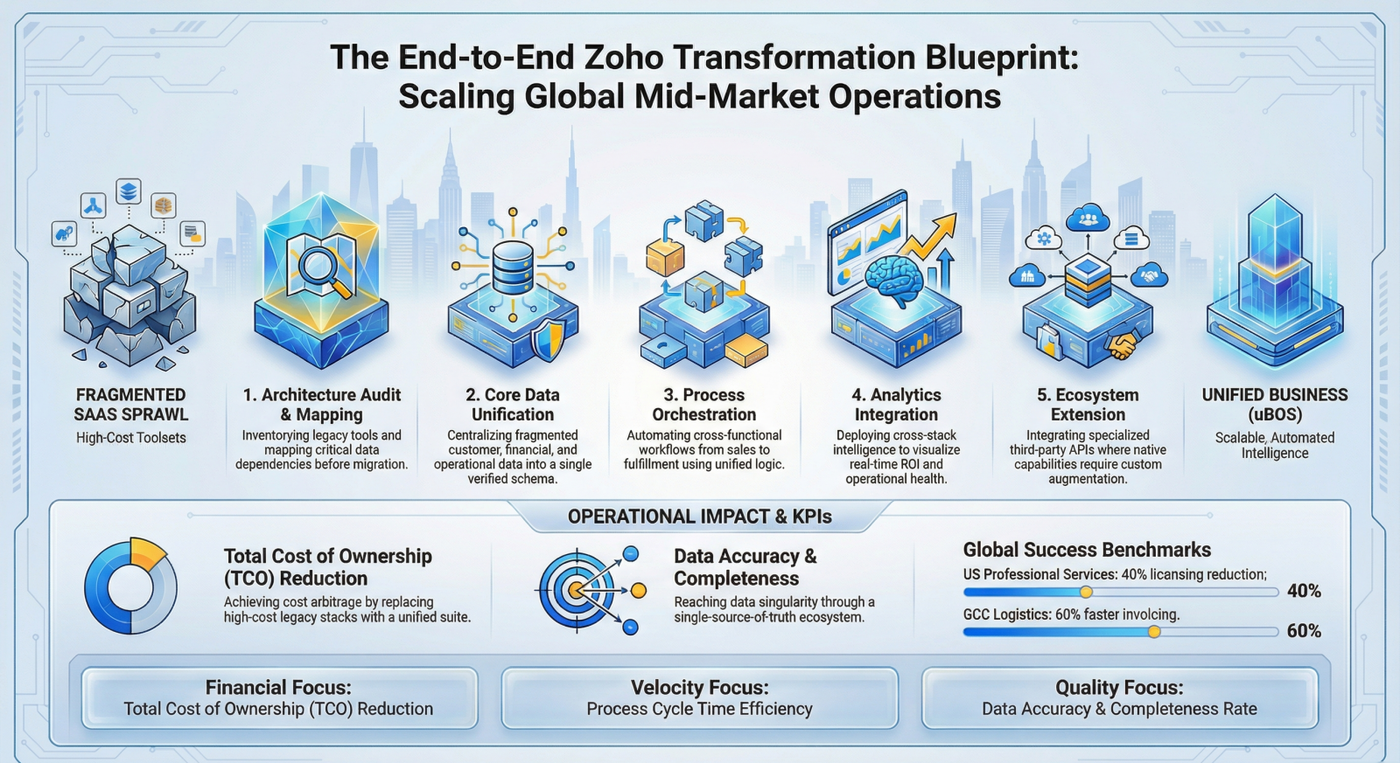
A comprehensive transformation framework designed to transition global mid-market enterprises from fragmented legacy environments to a Unified Business Operating System (uBOS). This blueprint provides a structured methodology to eliminate "SaaS Sprawl" and establish a single-source-of-truth ecosystem that scales horizontally.

Why It Matters

Fragmented ecosystems of disconnected tools create data silos and inflated licensing costs that hinder executive decision-making. By moving to an automated, intelligence-driven operating model, organisations can achieve measurable improvements in several key areas:

  • Total Cost of Ownership (TCO) Reduction.
  • Process Cycle Time Efficiency.
  • Data Accuracy & Completeness Rate.
  • Cross-Departmental Adoption Score.

Who It’s For

This capability is engineered for enterprise-level decision-makers, specifically CTOs and COOs, who are responsible for global operational architecture, digital transformation, and margin efficiency.

How It Works

The deployment of a Zoho Transformation Strategy is executed through the five-step Canonical Framework, ensuring data integrity and operational continuity throughout the transition:

  1. Architecture Audit & Mapping: A rigorous inventory of legacy tools and mapping of data dependencies.
  2. Core Data Unification: Centralising fragmented customer, financial, and operational data into a single verified schema.
  3. Process Orchestration: Automating cross-functional workflows using unified logic across the value chain.
  4. Analytics Integration: Deploying cross-stack intelligence to provide real-time visibility into ROI and operational health.
  5. Ecosystem Extension: Integrating specialised third-party APIs where custom augmentation is required without disrupting the core unified model.

Book a meeting