Google has officially rebranded NotebookLM as Gemini Notebook, bringing it closer to the broader Gemini ecosystem while keeping it as a standalone research workspace. Along with the new branding, users can expect:
What's changing?
NotebookLM is now called Gemini Notebook.
The platform continues to offer the same AI-powered research and note-taking experience, now as part of the broader Gemini ecosystem.
New capabilities, including advanced data analysis through secure cloud-based code execution and deeper integration with Gemini, are being rolled out.
Your existing notebooks, shared links, and data remain unchanged—no action is required.
This update reflects Google's continued investment in AI-powered productivity and research tools while ensuring a seamless experience for existing users.
If you have any questions or would like to explore the new capabilities, feel free to reach out.
Version 2.0 reflects refinements in the second and third stages of the framework. The Vectorize & Embed layer now converts unstructured text into high-dimensional semantic vectors that capture intent rather than keywords. The Contextualize layer has been strengthened with deeper domain grounding and more granular Role-Based Access Controls (RBAC), ensuring synthesized responses remain both relevant and secure.
Why It Matters: Reducing Retrieval Latency & Improving Freshness
These enhancements address core enterprise performance requirements. Optimized semantic processing enables retrieval latency under two seconds, supporting faster, decision-ready answers. Knowledge freshness is also improved by minimizing the lag between source updates and their availability in the answer layer—directly reducing the “search tax” that consumes nearly 20% of employee productivity.
Who It’s For: Enterprise Knowledge Managers & CIOs
Knowledge Engine v2.0 is designed for CIOs, CTOs, and Enterprise Knowledge Managers responsible for operating across fragmented data silos such as SharePoint, Slack, and legacy ERP/CRM systems. It provides a reasoning layer that transforms proprietary data into a governed, competitive asset while preserving institutional memory.
How It Works: The Cognitive Knowledge Nexus
The system operates on a structured Cognitive Knowledge Nexus framework:
Unify & Ingest: Connects disparate data sources into a continuous pipeline
Vectorize & Embed: Encodes semantic meaning for intent-based retrieval
Contextualize: Applies security controls and role-based relevance
Synthesize: Uses LLMs to generate citation-backed answers
Govern & Learn: Maintains output integrity through guardrails and human-in-the-loop feedback
To explore how Knowledge Engine v2.0 modernizes information architecture and improves organizational resolution rates, a strategy discussion can be scheduled.
A comprehensive transformation framework designed to transition global mid-market enterprises from fragmented legacy environments to a Unified Business Operating System (uBOS). This blueprint provides a structured methodology to eliminate "SaaS Sprawl" and establish a single-source-of-truth ecosystem that scales horizontally.
Why It Matters
Fragmented ecosystems of disconnected tools create data silos and inflated licensing costs that hinder executive decision-making. By moving to an automated, intelligence-driven operating model, organisations can achieve measurable improvements in several key areas:
Total Cost of Ownership (TCO) Reduction.
Process Cycle Time Efficiency.
Data Accuracy & Completeness Rate.
Cross-Departmental Adoption Score.
Who It’s For
This capability is engineered for enterprise-level decision-makers, specifically CTOs and COOs, who are responsible for global operational architecture, digital transformation, and margin efficiency.
How It Works
The deployment of a Zoho Transformation Strategy is executed through the five-step Canonical Framework, ensuring data integrity and operational continuity throughout the transition:
Architecture Audit & Mapping: A rigorous inventory of legacy tools and mapping of data dependencies.
Core Data Unification: Centralising fragmented customer, financial, and operational data into a single verified schema.
Process Orchestration: Automating cross-functional workflows using unified logic across the value chain.
Analytics Integration: Deploying cross-stack intelligence to provide real-time visibility into ROI and operational health.
Ecosystem Extension: Integrating specialised third-party APIs where custom augmentation is required without disrupting the core unified model.
Zoho has launched Zoho ERP, a unified platform designed to help manufacturing businesses manage operations, finance, people, and spend—all in one system.
Built to scale with your business, Zoho ERP brings together every critical function without complexity.
Key Features Included in Zoho ERP
✔ Manufacturing & Operations Management – Production planning, work orders, inventory, and order fulfillment
✔ Procurement Management – Purchase requests, vendor management, and purchase orders
✔ Inventory Management – Multi-warehouse tracking, stock control, and material traceability
✔ Finance & Accounting – Invoicing, taxation, banking, compliance, and financial reporting
✔ Payroll Management – Employee payroll processing with statutory compliance
✔ Expense Management – Track, approve, and control business and employee expenses
✔ Analytics & Reporting – Real-time dashboards and insights across all business functions
and much more...
Zoho ERP offers flexible plans and modular scalability, making it ideal for both growing manufacturers and large enterprises.
Thank you for being a valued part of the Quantazone journey. Your continued trust and partnership across the year have played a key role in everything we’ve built together.
As we enter the New Year, we remain focused on delivering robust solutions, streamlined processes, and measurable growth for your business. We look forward to achieving new milestones together and strengthening our collaboration further. ✨
Wishing you a successful and growth-driven New Year! 🎉
Independent service monitors show multiple Zoho service interruptions reported in mid-December 2025, with several hours of unavailability logged across applications.
This highlights that even major SaaS platforms can experience downtime, which may affect business operations if not anticipated.
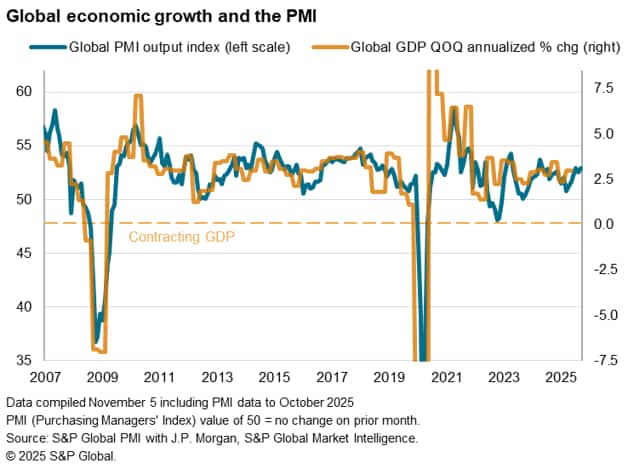
New global PMI data shows business activity expanding across sectors, signaling stronger demand ahead. Many companies are using this momentum to upgrade operations, automate workflows, and modernize core systems.
Cloudflare faced another global outage on Dec 5, 2025, disrupting access to major websites and SaaS applications worldwide.
Many users saw “500 – Internal Server Error” or complete service failure during the downtime.
Several countries — including the UK, Australia, and China — have recently updated their procurement laws.
What this means for global businesses:
• Stricter checks before awarding contracts
• New rules on supplier eligibility and transparency
• More preference for local sourcing in some regions
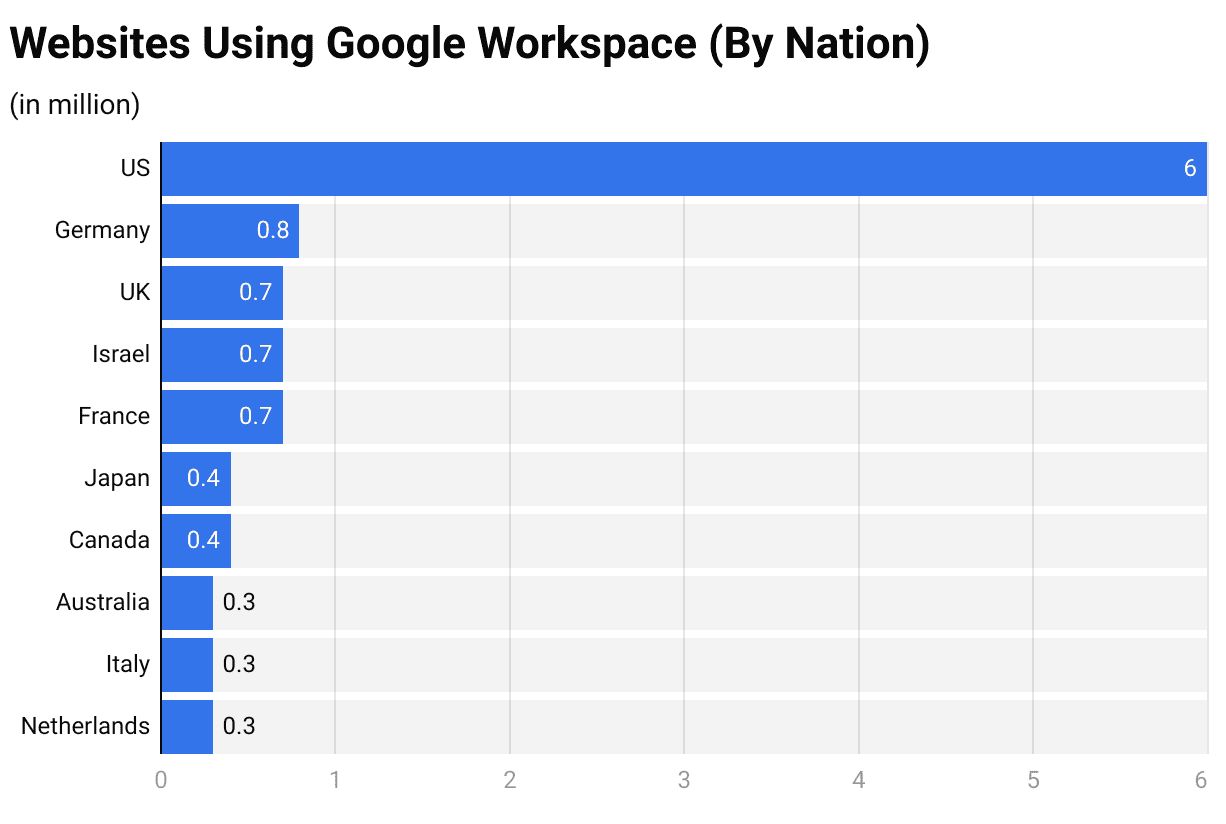
Google Workspace hascrossed 11 million paid enterprise users globally in 2025 — thanks to new AI-powered features and collaboration tools.
Admins can now migrate email and calendar data from Microsoft Exchange directly into Workspace, making switching easier than ever.